

How the future of hiring is moving toward verified talent, intelligent technology, and human judgment
For decades, the resume has been one of the most important tools in recruitment.
It has served as a candidate’s professional introduction—a document designed to summarize education, work experience, certifications, skills, accomplishments, and career progression.
But the world of work is changing.
And as technology transforms how people apply for jobs and how organizations search for talent, one thing is becoming increasingly clear:
A resume alone is no longer enough.
The future of recruitment will not necessarily mean the disappearance of resumes. Instead, the resume may become just one component of a much larger picture—one that includes verified credentials, demonstrated skills, professional experience, references, assessments, availability, communication, reliability, and organizational fit.
The question employers increasingly need to ask is no longer simply:
“Does this candidate have a good resume?”
It is:
“Can we confidently determine that this person is qualified, capable, reliable, and right for this role?”
That shift could fundamentally transform recruitment.
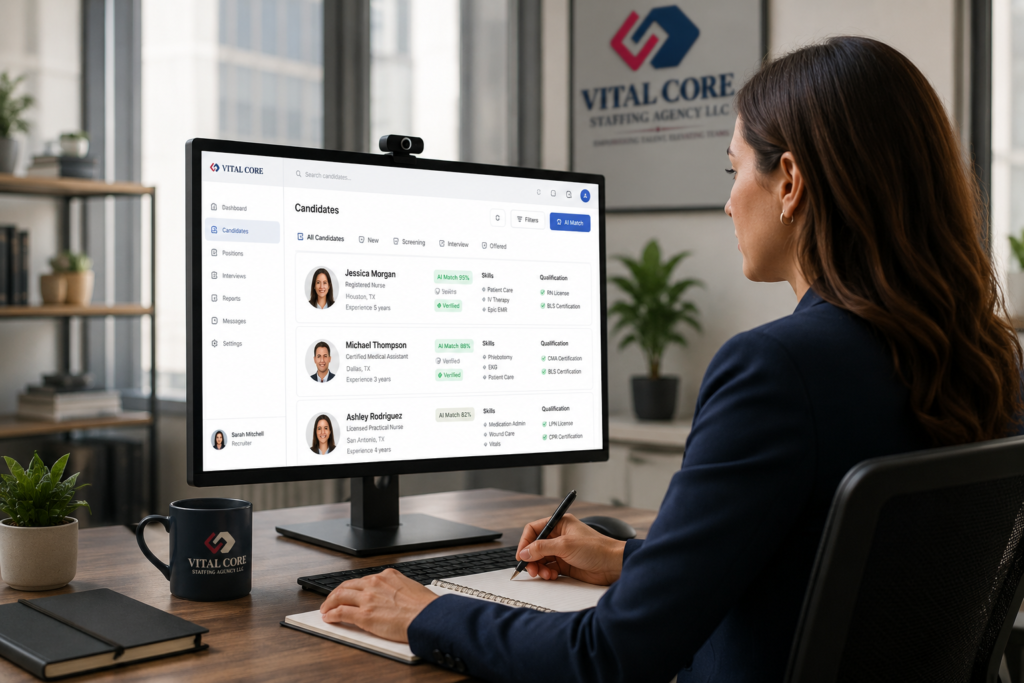
The Future of Recruitment: technology helps recruiters see the whole candidate, not just the resume.
The Resume Was Built for a Different Hiring Environment
The traditional resume was designed for a world where employers might receive dozens of applications for a position.
A candidate prepared a document. The employer reviewed it. Selected candidates were interviewed. References were checked. A hiring decision was made.
Today, organizations can receive hundreds of applications for a single position.
Technology has made applying for jobs faster and easier than ever. A candidate can find a position, tailor a resume, write a cover letter, and submit an application within minutes.
But there is a problem.
The same technology that makes recruitment more efficient also makes it easier for candidates to create highly polished application materials.
Artificial intelligence can help applicants improve their resumes, generate cover letters, optimize keywords, and tailor their applications to specific job descriptions.
As a result, a beautifully written resume may tell an employer less than it once did.
It may demonstrate that the candidate is highly qualified. But it may also simply demonstrate that the candidate knows how to present information—or knows how to use AI.
The distinction matters.
The Problem Isn’t the Resume
The resume is not the enemy. It remains useful.
It gives recruiters an initial understanding of a candidate’s background. It provides context and allows professionals to summarize their careers efficiently.
The problem occurs when employers treat the resume as a complete representation of the person behind it.
It isn’t.
A resume can tell an employer that someone has five years of experience. It cannot necessarily tell the employer what those five years looked like.
● Was the person dependable?
● Did they work well with others?
● Did they demonstrate professionalism?
● Were their credentials maintained?
● Did they communicate effectively?
● Did they perform their responsibilities consistently?
● Did they leave previous positions because of career advancement, organizational changes, or recurring workplace difficulties?
These are questions that a resume alone cannot answer.
The future of recruitment will therefore require employers to look beyond the document.
From Resume-Based Hiring to Evidence-Based Hiring
The next generation of recruitment is likely to place greater emphasis on evidence.
Instead of relying primarily on what a candidate says about themselves, organizations can increasingly look for information that helps verify and demonstrate those claims. That may include:
● Professional credentials
● Licenses and certifications
● Relevant employment history
● Skills assessments
● Professional references
● Work samples
● Background verification where appropriate
● Demonstrated competencies
● Availability
● Communication skills
● Relevant experience
● Role-specific qualifications
The goal isn’t to make recruitment unnecessarily complicated. The goal is to make hiring decisions more informed.
This is particularly important when hiring for positions where an employee’s responsibilities directly affect customers, clients, patients, residents, or the broader community.
Healthcare Recruitment Makes This Especially Important
Healthcare provides one of the clearest examples of why recruitment must go beyond resumes.
Healthcare organizations don’t simply need people who look qualified on paper. They need professionals who can perform their responsibilities safely, professionally, compassionately, and consistently.
A candidate may possess the required certification. But employers also need to know:
● Can this person communicate effectively?
● Can they work as part of a team?
● Can they handle pressure?
● Do they understand professional boundaries?
● Can they interact respectfully with patients and families?
● Are they dependable?
● Can they adapt to changing circumstances?
● Will they contribute positively to the organization?
These qualities may not appear clearly on a resume. They require conversation, verification, assessment, and human judgment.
That is why the future of healthcare staffing will require more than simply collecting applications.
Artificial Intelligence Is Transforming Talent Discovery
Recruitment teams deal with enormous amounts of information: resumes, applications, credentials, references, candidate profiles, job descriptions, interview notes, emails, and availability.
AI can help organizations process this information more efficiently.
Instead of manually reviewing hundreds of applications, intelligent recruitment technology can help identify candidates whose qualifications are relevant to a particular position.
● AI can help organize candidate information.
● It can identify potential matches.
● It can automate repetitive administrative tasks.
● It can help recruiters prioritize their attention.
● And it can potentially help organizations discover qualified professionals who might otherwise be overlooked.
But there is an important principle that should never be forgotten:
AI should support recruitment professionals—not replace human judgment.
Technology Can Find the Candidate. People Understand the Candidate.
There is an interesting paradox emerging in recruitment. As technology becomes more powerful, human expertise may become even more valuable.
Technology can identify patterns. People understand context.
An AI system may identify that a candidate has several years of healthcare experience. A recruiter can ask what that experience actually involved.
AI can identify credentials. A human recruiter can have a conversation about how those credentials were applied in real-world situations.
Technology can help narrow the candidate pool. Human expertise can help determine who deserves a closer look.
That combination is where the future becomes especially powerful.

AI + Human Recruiter: technology organizes recruitment data so people can focus on relationships.
The End of “Spray and Pray” Recruiting
For some organizations, recruitment has become a numbers game: post a job, receive hundreds of applications, filter the applications, interview a few people, hire someone—then begin the process again when the position becomes vacant.
This approach can create a cycle of constant replacement.
The future of recruitment should be different. Recruitment should not simply be about filling vacancies. It should be about building sustainable teams.
A successful hire can contribute to:
● Stronger employee retention
● Better team performance
● Improved workplace culture
● Greater productivity
● Better service delivery
● Reduced recruitment costs
● Long-term organizational stability
The goal should not simply be to fill today’s opening. The goal should be to find someone who can contribute meaningfully to the organization.
Cultural Alignment Will Matter More
Qualifications matter. Experience matters. Skills matter. But organizational culture matters too.
A highly qualified professional who consistently struggles to work with colleagues may not be the right match for a particular organization.
Likewise, a professional who demonstrates excellent communication, adaptability, professionalism, teamwork, and commitment may become an exceptional employee.
This does not mean organizations should rely on vague ideas of “culture fit.” Instead, employers should clearly define the professional behaviors, values, communication standards, and expectations that matter for each position. Then recruitment can assess candidates against those expectations.
The Rise of Verified Talent
Imagine a future where a professional’s identity in the hiring marketplace is no longer represented primarily by a PDF resume.
Instead, imagine a secure professional profile containing relevant and verified information:
● Credentials
● Certifications
● Experience
● Skills
● References
● Availability
● Assessments
● Professional history
The employer could then evaluate a candidate using a much broader picture. The question would no longer simply be “What does your resume say?” It could become “What can we confidently verify about this professional?”
That shift could dramatically improve the recruitment experience for both employers and candidates. Employers could spend less time sorting through irrelevant applications. Qualified professionals could have more opportunities to demonstrate their capabilities. And staffing organizations could become more valuable by helping both sides navigate this increasingly sophisticated process.
Recruitment Could Become More Predictive
The next generation of recruitment technology could move beyond simple keyword matching. Instead of searching for candidates based solely on words appearing in a resume, intelligent systems can potentially help recruiters consider multiple factors simultaneously.
For example: experience + skills + credentials + availability + role requirements + organizational needs + demonstrated competencies can create a more meaningful candidate match than a simple keyword search.
This does not mean that an algorithm should decide who gets hired. Instead, technology can help recruiters ask better questions and focus their time where it matters most.
The technology narrows the field. The human evaluates the person.
Candidates Will Also Become More Selective
The transformation of recruitment will not only affect employers. It will affect candidates as well.
Today’s professionals increasingly want to know more about the organizations they are considering. They want to know:
● What is the workplace culture?
● How are employees treated?
● Are there opportunities for growth?
● Is the organization reliable?
● Does the work have purpose?
● Will the employer invest in its people?
Recruitment is therefore becoming a two-way relationship. Employers evaluate candidates. Candidates evaluate employers.
Organizations that understand this shift will be better positioned to attract and retain talented professionals.
What This Means for Staffing Agencies
The staffing industry is changing too. A staffing agency can no longer create maximum value simply by maintaining a large database of resumes.
The real value increasingly lies in quality, verification, speed, relationships, professional judgment, and understanding the needs of both employers and candidates.
A modern staffing partner should help employers answer important questions:
● Who is qualified?
● Who is available?
● Who has the appropriate credentials?
● Who has relevant experience?
● Who is likely to be a strong match for this particular environment?
● Who can contribute effectively?
This is much more valuable than simply forwarding resumes.

The Modern Healthcare Team: RNs, CNAs, caregivers, and HHAs working together for patients.
Where VitalCore Fits Into the Future
At VitalCore Staffing Agency LLC, we believe the future of recruitment lies in combining modern technology with human expertise.
Our goal is not simply to put more resumes in front of employers. Our goal is to help organizations connect with professionals who are appropriately qualified, dependable, and aligned with the needs of the position.
Our healthcare staffing focus connects organizations with professionals such as:
● Caregivers
● Certified Nursing Assistants — CNAs
● Home Health Aides — HHAs
● Nurses
● Other qualified healthcare professionals
We understand that healthcare organizations need more than people who meet minimum requirements on paper. They need professionals who understand the responsibility that comes with caring for others.
They need dependable people. They need professionals who can communicate and work effectively within a team. And they need staffing partners who understand that every placement represents more than a filled position.
It represents a person joining a team.
Technology Should Make Recruitment More Human
At first glance, artificial intelligence may appear to make recruitment less personal. But when used properly, the opposite can happen.
Imagine recruiters spending less time manually sorting through hundreds of resumes and more time having meaningful conversations with qualified professionals.
Imagine technology handling repetitive administrative work while recruiters focus on relationships.
Imagine employers receiving fewer irrelevant applications and more qualified candidates.
Imagine candidates receiving faster communication and a smoother recruitment experience.
That is the promise of responsible recruitment technology.
Automation should remove unnecessary work—not remove humanity from hiring.
The Future Will Demand Better Verification
As AI makes it easier to produce polished resumes, professional summaries, cover letters, and applications, verification will become increasingly important.
This does not mean assuming that candidates are dishonest. It means recognizing that technology has changed the hiring environment.
When almost anyone can create a highly polished professional document, the document itself becomes less differentiating. The differentiator becomes evidence:
● Verified credentials
● Relevant experience
● Demonstrated skills
● Professional references
● Appropriate assessments
● Consistent performance
● Human interaction
Together, these elements provide a much more complete picture of a professional.
The Resume Will Survive—But It May No Longer Stand Alone
It is unlikely that resumes will disappear completely. They remain useful. They provide a concise professional summary. They help candidates organize their careers. They give recruiters an initial understanding of someone’s background.
But the resume of the future may look very different from the resume of the past. It could become an entry point into a much richer professional profile.
Instead of being the final word on a candidate, the resume may become the beginning of the conversation.
And that is a healthy evolution. Because hiring someone should never depend solely on how well they can write a resume.

Beyond the Resume: a printed resume alongside a complete, verified professional profile.
The Organizations That Adapt Will Have an Advantage
Every major technological shift creates opportunities for organizations willing to adapt. Recruitment will be no different.
Organizations that continue relying entirely on outdated processes may struggle with:
● Slow hiring
● Candidate shortages
● High turnover
● Poor candidate experiences
● Recruitment inefficiencies
● Increasing administrative costs
Organizations that intelligently combine technology and human expertise may be better positioned to:
● Identify talent faster
● Improve candidate matching
● Reduce repetitive recruitment tasks
● Strengthen verification processes
● Improve candidate experience
● Build stronger teams
● Make more informed hiring decisions
The competitive advantage won’t necessarily belong to the organization with the most technology. It will belong to the organization that uses technology intelligently.
The Future of Recruitment Is Already Here
The next great disruption in recruitment isn’t simply artificial intelligence. It is the transformation of what organizations consider evidence of talent.
The resume will remain. But alongside it will come better verification, smarter technology, stronger assessments, richer professional profiles, deeper human conversations, and more intelligent matching.
Organizations that succeed will understand that recruitment isn’t simply a transaction. It is the beginning of a relationship.
A good hire doesn’t simply fill a vacancy. A good hire strengthens a team. A strong team strengthens an organization. And strong organizations create better outcomes for the communities they serve.
The future of hiring isn’t about choosing between technology and people. It’s about using technology to find the right people—and using human expertise to understand them.
That future isn’t coming. It’s already here.
VitalCore: The Future of Staffing — trust, professionalism, technology, and human connection.
VitalCore Staffing Agency LLC
At VitalCore Staffing Agency LLC, we believe in a smarter, more human approach to recruitment—one that combines modern technology, professional expertise, and a people-first mindset.
Our goal is simple:
● Find and connect the right talent.
● Build stronger teams.
● Create lasting value.
We are building a staffing approach designed for the changing world of work—where technology helps us discover talent, while human expertise helps us understand the people behind the applications.
Because the future of recruitment isn’t about collecting the most resumes.
It’s about connecting the right people with the right opportunities.
And at VitalCore, we believe that is how stronger teams are built.
VITALCORE STAFFING AGENCY LLC
Empowering Talent. Elevating Teams.
Healthcare Staffing | IT Staffing | Workforce Solutions
Massachusetts